Sunday, March 27, 2011

Richard Cosway (1742-1821)


Cosway was a prolific artist and at least one of his miniatures seems
to come up for sale in every major London auction.  However, his
drawings are not so often seen.  Even rarer are his oil paintings.


This oil painting, attributed to Richard Cosway, is the first we have seen
at close hand.  It could well be that because they are unsigned and
quite unlike his miniature work, they are not recognised.

When Cosway was training as an artist in London, he was said to have
painted erotic scenes on snuffboxes.  As far as we know, none of this
work has yet been discovered.


 However, some of his miniatures could
almost come into the category of erotic, such as this portrait of
 Lady Charlotte Sophia Leveson-Gower (later Duchess of Beaufort)
c.1787  Originally mounted in a gold box, this portrait was probably
painted for the benefit of her husband-to-be.


An unknown lady c.1785


 At one stage this miniature was probably mounted in a box, as indicated by
the instruction written in French on the reverse.  A smaller size
miniature of excellent quality, but not displaying the cloudy sky
background that became Cosway's trademark.


These next two miniatures are two classic 1790 miniatures with the famous cloudy sky background
 and signed in full on the back.


Unknown Gentleman.


The signature on the back with Cosway's Latin inscription stating he is
miniature painter to The Prince of Wales

Madame Marie Laubevinska, an opera singer.


Cosway output included a lot of pencil drawings, some of them coloured.

A pencil and watercolour drawing on card. dated 1796.  Either
Cosway never mastered perspective or else he deliberately elongated
the body for the sake of elegance.
  The face is very recognisable as by Cosway


A pencil and watercolour drawing on card.  c.1805  Earl
Harrington.  Rare signature on the back.  An extraordinary work,
reflecting the sitter's interest in magic and chivalry and his
obsession with Henry VIII.


Unknown Gentleman Signed and dated '18001'. 

 Cosway had never experienced writing
the numbers for the start of a new century and probably didn't know
how to 'start the year', hence the extra '0'. He was also rather
cheekily still using his elaborate signature with his boast of being
miniature painter to the Prince of Wales, which of course he was not
at this stage.  Horace Hone had been appointed in his place in 1795   .
This later miniature, in sombre colours is rather sad, as are all the
miniatures he painted in this 'grey' period, perhaps reflecting his
own state of mind.  Lacking the brilliant Cosway blue cloudy sky
background, his 'grey' period miniatures are never as eagerly sought
after by collectors


Saturday, March 12, 2011

William, John and Edward Naish


JOHN W. NAISH (1771-1852)
Born in Axbridge, Somerset, like his brother, William, he entered the
Royal Academy School on a six year course. The Royal Academy records
show that he entered the school on 18th February, 1791, aged 20 . It
is not known whether he completed the course.  He exhibited miniatures
at the Royal Academy from 1790-1795. He is also known to have painted
sporting subjects.  Apparently, a picture of a spaniel, signed and dated by him on
the back (what looks like 1791?) was sold at Sothebys on 21st November
1979 (Lot 23).
During his time in London, his known addresses are:

360 Oxford Street (1790/91)
464 Strand (1792/93)
25 Strand (1794/95)


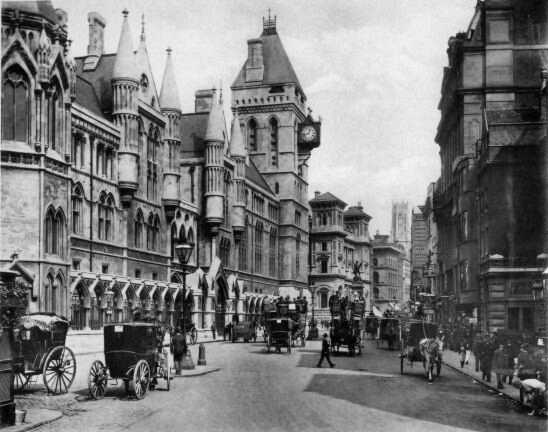
Oxford Street in Victorian times


The Strand in Victorian times


Like his brother, William, very few signed examples of his miniatures
appear to exist.  One, ostensibly signed on the back, is in the Dumas
Egerton Collection, now on long term loan at the Scottish National
Portrait gallery.  Sadly, we have no good image of this miniature and
to date have been unable to obtain one.


 By 1797, he is believed to have lived in Bristol at 27 College Green,
an address given on the back of a a miniature painted in that year.  A
few years later, c.1803, he painted the pair of miniatures below
whilst at 43 Princes Street, Bristol.  This address appears on his
trade card tucked into the back of the miniatures.


A pair of portraits c.1805 by John Naish when he was in Bristol.
Trade card on the reverse.  Copyright of the Victoria and Albert
Museum, London.


  Although the trade card does not mention the
christian name of the artist we know that his brother, William, died in 1800 and so strong
circumstantial evidence dictates that it is John.  It cannot be anyone
else as the trade card states that the artist is late of the Royal
Academy and records show that only William and John Naish attended the
Royal Academy school and exhibited there. Daphne Foskett states in her Dictionary and Guide that William Naish lived for a time in Bristol, but there is no evidence to support this and it is extremely unlikely to be so.  For one thing,  William  had a large and successful London practice, he is placed firmly at London addresses for all his adult life by his exhibits at the Royal Academy and he is always described as being a London resident by contemporaries.


Engraving of Isaac Ingall after John Naish

There are several known engravings after John Naish.  An engraving dated 1797
by John Yeartherd, after John Naish, of Isaac Ingall (1678 - 1798), a
strange looking portrait.  The sitter was famous for reputedly living
until 120!  He worked for the Webster Family at Battle Abbey, Sussex
for 90 years.
In 1805, The Gentleman's Magazine states that John Naish '...resides
in or near London' and was patronised by and a friend of the late Sir
Joshua Reynolds, under whom he studied portraiture.

In some reference books, it is stated that John Naish lived with his
brother, William, at one time, but there is no evidence to support
this, despite the fact that they both lived at the same address, but
at different times.  262 Stand, London was occupied by William Naish
between 1786-91 and by John Naish during 1792/93 according to Royal
Academy records.

The 1851 Census records John Naish as being married and still
practising as an artist, aged 80.  By this time, he had returned to
his home county of Somerset and was living as a lodger at 72 Silver
Street.  The head of the household was a Mr. Durban, an agricultural
worker and his wife, a laundress.  John Naish is recorded as having
died in 1852.


If anyone has a miniature or other painting by John Naish, or any further information, we would love to hear from you.


Sunday, March 6, 2011

Alyn Williams (1866-1955)


The Welsh-born artist, Alyn Williams, was one of the most successful
miniature painters of his generation.  He studied art at the Slade
School in London, and also under Courtois in Paris.  Although he set
up his practice initially in London,  in later life he split his time
between New York and London.   


Lady in a black hat Signed and dated 1898


 He became the first President of the
Royal Miniature Society, a post he held for 50 years, exhibiting there
regularly.   He also exhibited at the Royal Academy between 1890-1904,
the Paris Salon and in America. One of his most famous pupils was
Mahala Theodora 'Dora' Webb.


Unknown lady Signed and dated 1900


 His miniatures of little girls are invariably insipid.  

Unknown little girl Signed and dated 1900


  Williams' first wife, Kathleen, was
from Derbyshire and the couple lived in Kensington.  Later in life, he
had an American companion, Mrs. Anna Dorsey Williams, although it is
not known whether or not they actually married.  It seems from
official documents that the artist intended to live permanently in New
York, but in the event, he returned to Britain.


His portrayal of
women utilizes harsh brushstrokes and bright colours.

Violet Hammersley Signed and dated 1906


 He painted many
wealthy and influential people, including members of the Royal Family.
 He always signed his work in full on the front, invariably with the
date,  occasionally adding his address to the backing card. 

King Edward VII Signed and dated 1908


Alyn Williams was a prolific artist with a long career.  


Unknown boy titled 'Smiles' Signed and dated 1921


Monday, February 21, 2011

A Delve into George Engleheart's Fee Book


George Engleheart  (1750-1829) was one of the most prolific
miniaturists of his day. He also kept a detailed fee book, which is
still in the possession of his family descendants.  Although there are
very useful extracts from this fee book to be found in George
Williamson's monograph on Engleheart, published in 1902, there is
nothing like referring to the real thing to glean those extra snippets
of information that make a miniature so much more interesting!  Only a
few artists from the Georgian/Regency period kept details of who they
painted and what fees they charged, and fewer of these precious
historic records survive.  For in those days, there was no fiscal duty
to keep such records, as there was no income tax or tax on savings and
a person's wealth was no business of anyone's, save for the curious
and the fortune-hunting.


'Miss Banks' by George Engleheart (in the collection)

1775 was Engleheart's first year 'in business'  and his fee book
records that a Miss Banks was painted on 15th February 1775.  Lady
Banks was painted the day before.  The sum of £6 6s (6 guineas) was
charged for the two portraits and Engleheart's bill was settled on
25th March 1775.


'Captain Flint' by George Engleheart (in the collection)

By 1802, Engleheart's charge for a miniature had risen from £3 3s to
£12 12s, which was still quite a modest sum, as fees for top miniature
painters go.  This is shown in the fee charged to 'Mr. Flint' for a
miniature painted 16th January 1802, and 'copied' on 23rd March 1802.
Flint is recorded as paying the artist for one miniature on 7th April
that year, with the copy being paid for by a Mrs. Seton three months
afterwards 'for Mr. Flint'. One wonders whether the Flints were having
a little financial difficulty.  The artist cannot have been very
pleased, having to wait four months for his money. Later, the same
sitter is referred to as Mr. Geo (George) Flint and also Capt. George
Flint.


'Mrs. Flint' by George Engleheart (in the collection)


Reverse dated 1802

The artist does not record the date he painted Mrs. Flint, although he
signed it on the front and inscribed it on the back.  This shows that
the records Engleheart kept were not completely comprehensive.


Six years later, the couple were painted again; Mrs. Flint on 2nd
March 1808 and 'Mr. Geo Flint' on 21st March in the same year.
According to the fee book, the charge was still £12 12s each and this
time Flint settled the bill 'promptly' on 30th May 1808.

Although we have not counted the entries in the fee book ourselves,
this figure is generally accepted as being 4,853 over the space of
Engleheart's 39 year career.  This works out as an average of over 2
per week.  Given that it is not completely comprehensive, it is
possible that his true productivity is nearer 3 per week. A truly
astounding achievement.


Monday, February 14, 2011

Ada Whiting (1859-1953) - a modern-day Anne Mee


Ada Whiting, who was born in Australia, had a life that bore
extraordinary parallels to the famous Georgian miniature painter, Anne
Mee.  Ada's father,  George Cherry, who was born in England and
emigrated to Tasmania,  was an artist, but he earned his living as a
photographer.  His talent was recognised when he was appointed as one
of the small battery of official photographers following the
Australasian tour of the then Duke of Edinburgh, Prince Alfred, in
1868.


A pencil drawing by Ada of her father drawn in 1885 when she was 26


By the time she was 18, Ada and her four younger siblings were
orphaned, when both their parents died young.  Ada moved her family to
Melbourne, where she found work in a photographers' studio, colouring
photographs.  Largely self taught, she managed to support herself and
her family with this work.  Later she met and married her husband,
Saville Whiting, a photographer.  The marriage was not a success,
despite two children, and Ada left him.  By this time, Saville's
occupation was described as 'Speculator'!


A self-portrait sketch


She painted her first miniature when she was 40 and two years later
exhibited two portraits at the Royal Academy, London. However, she was
not much interested in exhibiting, preferring to get on with earning a
living.   Soon she became noticed and in 1905 the National Art Gallery
of New South Wales bought one of her miniatures for ten guineas.


 Portrait of an unknown lady painted in 1907
(In the collection)


 By this time, she was painting for clients around the world, including
many celebrities such as the most famous diva of her day, Dame Nellie
Melba.  She and Melba became friends and Ada painted many portraits of
her.  Urging her to come to London with her, where she promised to
introduce Ada to London society, the artist never actually left
Australia, much to her friend's dismay.  Modest and stoical, Ada
carried on with her painting, taking what work came her way. Some of
her compatriots were scathing about her Tasmanian roots, dubbing her
'The Convict Artist', a nasty reference to Tasmania's past history as
a penal colony.  In 1935, an Australian newspaper ran one of many
articles about her, praising her superb skills and stating that
miniatures were as popular as ever.  She was a quick worker,
completing a miniature in two or three days, and always from sittings,
unless asked to paint a posthumous portrait.
In her later years, she lived with her son, Saville Junior, who was a
clever engineer.


Ada painting a miniature at the age of 80 with the aid of a magnifying glass


This miniature was painted in 1941 when Ada was 82.
(in the collection)


When miniatures became too difficult to paint because of her eyesight,
she painted flowers.  She was still painting at 91.  Many miniatures
by Ada are scattered around the world, all of them signed on the front
with her conjoined initials 'AW' and sometimes signed in full on the
reverse, also.    We have noticed that her work is sometimes
attributed to a contemporary, Alyn Williams, as they share the same
initials.  However, Williams always signed his name in full on the
front, which makes his work unmistakable.


We are grateful to Ada Whiting's relatives, who kindly gave us further
details about her life and supplied the photographs.


Tuesday, February 8, 2011

Out and About Looking for Miniatures


On a recent visit to Bedfordshire we found ourselves looking for miniatures. Preferably a masterpiece! We happened upon two, neither of which was a portrait miniature.

The first, Woburn Abbey, was closed for the winter months.


After paying to get into the grounds and Antique Centre, (said to be the best outside of London)
we came across the second masterpiece.


The magnificent  Cedar of  Lebanon just before the entrance to Woburn Antique Centre. 
The tree was reputedly planted between 1743 and 1800,
the heyday of the portrait miniature and during the lifetime of such great artists as Richard Cosway and John Smart. 


Sadly, the Centre was not a source of rich pickings for miniature lovers. An example above of the classic fake miniature complete with piano key frame and 'signature' , politely referred to as a 'decorative miniature.'


Elsewhere, another example of the 'decorative miniature' with pretty bow top frame


 and cheeky signature 'Rienolds!'


On the back, the sitters name, written in 'olde worlde' writing to add to 'authenticity!'


A crudely over painted print in battered frame.


And finally, not a fake but a pretty over painted photograph, (a 'photominiature')
signed and encased in a gold frame.
These were very popular during the late nineteenth and early twentieth century before mass availability of colour photography


Signature of photographer and artist. Some were more skilled than others.


A close up showing the photo underneath.

Happy hunting for that masterpiece!!


Sunday, January 23, 2011

William Naish and William Thick(e) revisited


Since we first wrote about William Naish and William Thicke and the
similarities in their work, we have had the opportunity to thoroughly
examine a number of miniatures by William Naish, and to do some
research into William Naish' s life.   The breakthrough came when we
acquired a miniature with a Naish trade card on the reverse, an
earlier example than the one we already had.


An early miniature by William Naish, probably painted when he was in his late teens


With his Trade Card on the back. The printed 'Naish' on the card looking very similar to the signature on the one signed example of this artist's work that we have seen


The unsigned miniature already in the collection attributed to William Naish showing his mature style.


 We then compared both of
these with one known signed and another unsigned miniature  (not in our collection), both
ostensibly by William Naish, and obtained examples of engravings after
Naish.  After looking for a while, a distinct set of peculiarities
became apparent, some of which even show up in engravings.  This
caused us to completely change our mind about the possibility of the above
miniature being painted by William Thicke. It perfectly matches the
nuances picked up in all the William Naish miniatures.
 This is what we noticed that the William Naish miniatures had in common:


A small round bare patch of ivory in the corner of the eye, which
looks as though it has been scraped out.


A round patch of light on the chin and a
 block of light coming down over the top lip


Small dark brushstrokes modelling the tip of the nose
-and an oblong shaped light down the centre of the nose


William Thicke's work shares several techniques in common with Naish.
The rather naive appearance.The heavy lines under the eyes. The curvy full mouth. 
The individual strands of hair. Even the modelling at the
tip of the nose looks decidedly similar.  Anyone familiar with
Thicke's miniatures knows that they are modest little affairs, usually
with plain background, but occasionally with a curtain or something
more adventurous.  The background strokes are usually fairly evenly
sized as seen in the following example from the collection


Mr. Nathan Crowe by William Thick(e)
William Thick(e)'s signature on backing board


William Naish, however, uses a variety of different brushstrokes in
his background and frequently changes direction.


An early engraving of a William Naish miniature


 Although we see him
today as a rather quirky and unimportant miniature painter with a
short career (he was only 33 when he died), in his day William Naish made quite a
name for himself and built up a substantial career painting actors and
actresses.  He was described as an 'esteemed' miniature painter and
The Gentleman's Magazine Volume 97, Part 1 1805 wrote on page 203
'Axbridge is the birthplace of two very great geniuses in the art of
painting, Mr. William and Mr. John Naish...The former (William) to the
irreparable loss of the Polite Arts, is lately deceased.'  The magazine
even published a posthumous 'Ode to Mr.William Naish, Limner' written
by a friend.